



US Fighter Jet Shot Down Over Iran as Missile & Drone Exchanges Push Oil Prices Higher
Global / Middle East A US fighter jet has been shot down over Iran, escalating the already‑intense missile and drone exchanges between Washington and Tehran and sending global oil prices sharply higher, financial and defence analysts say. The incident, which occurred during a wave of cross‑border strikes in the ongoing 2026 Iran war, marks the first confirmed loss of a manned US warplane in Iranian airspace and has triggered urgent search‑and‑rescue operations for the crew, while raising fears of a broader regional conflagration.
Downed F‑15E over central Iran
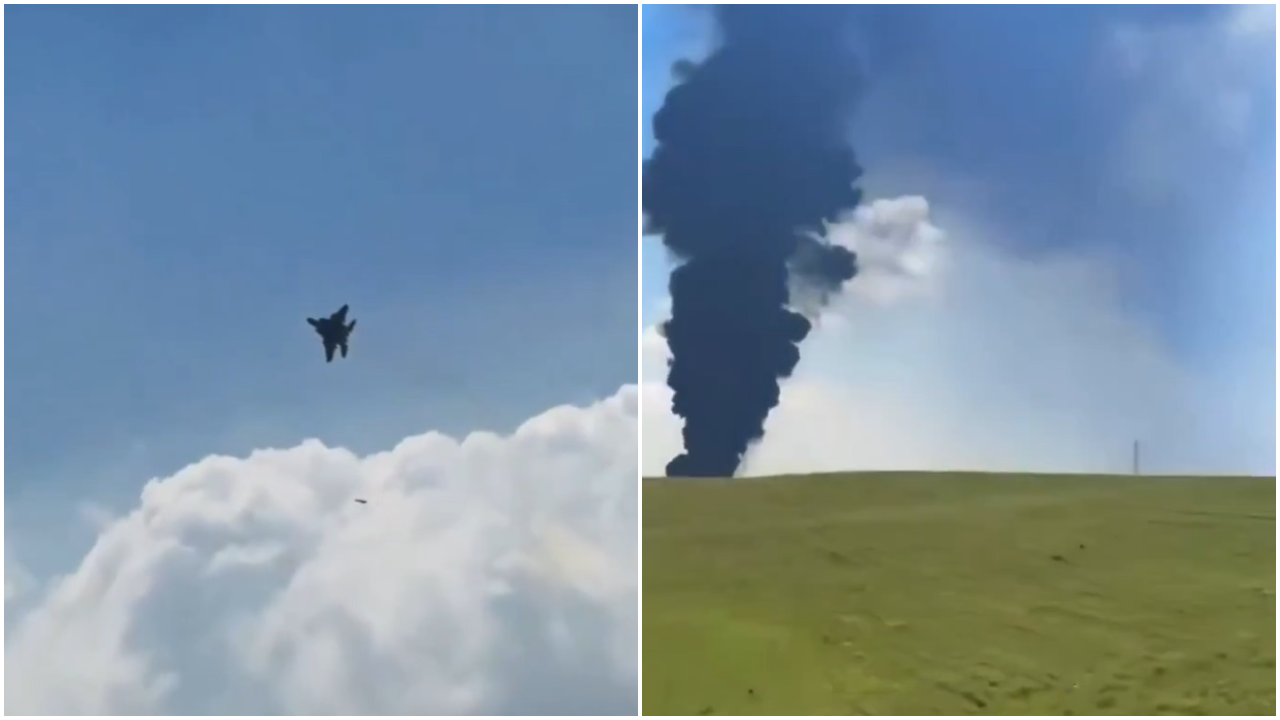
US officials and media reports confirm that an F‑15E Strike Eagle, flown by a two‑member crew, was brought down by Iranian air‑defence systems over western or central Iran. The aircraft, part of the US Air Force’s forward‑deployed fleet in the Middle East, was operating in a high‑risk environment characterised by dense radar coverage and mobile surface‑to‑air missile batteries deployed by Iran’s Islamic Revolutionary Guard Corps (IRGC).
According to US sources, both crew members ejected safely after the jet was hit, and one of them has been successfully rescued by US special‑forces teams operating in the region. The search for the second crew member is still underway, with intelligence support reportedly being provided by Israel and other allied partners to locate the missing airman within hostile territory.
A day of multiple aerial losses
The downing of the F‑15E was not an isolated event. Iranian forces have also targeted another US aircraft, an A‑10 Thunderbolt attack plane, which managed to exit Iranian airspace before the pilot ejected and was later recovered. In all, the US and its allies have lost at least two combat aircraft in thousands of sorties flown over Iran since the start of the 2026 air campaign, underscoring the effectiveness of Iran’s layered air‑defence network.
Meanwhile, Tehran has claimed that it has shot down additional US and allied jets, including an **F‑35 stealth fighter**—a claim that US officials have neither confirmed nor fully denied, but have described as “highly contested” intelligence. Drone‑footage clips broadcast by Iranian state media show burning wreckage and intercepted aircraft, though image‑analysis experts caution that some of the visuals may be from older or staged incidents.
Missile and drone blitz across the Gulf
The aircraft losses come amid a broader pattern of missile and drone strikes that have turned the Persian Gulf and surrounding regions into a high‑risk theatre for military and commercial operations. Iran has responded to repeated US‑led air raids on its missile and drone infrastructure by launching barrages of ballistic missiles and Shahed‑type kamikaze drones against US bases in Qatar, Kuwait, Bahrain, and the United Arab Emirates, as well as against Israeli and allied targets in the Eastern Mediterranean.
On the other side, US Central Command has launched heavy‑weight strikes using **B‑2 bombers**, **Tomahawk cruise missiles**, and suicide‑drones to hit Iranian underground missile silos, radar installations, and command‑and‑control nodes near the Strait of Hormuz and along the Iran–Iraq border. The use of AI‑aided targeting and autonomous drones has allowed the US and its allies to sustain a high tempo of operations, but at the cost of accepting that some aircraft and systems are inevitably vulnerable to Iranian air defences.
| Conflict element | Latest developments (April 2026) |
|---|---|
| US fighter jet shot down | F‑15E Strike Eagle downed over Iran; one crew rescued, one still missing |
| Other US aircraft losses | A‑10 Thunderbolt hit but pilot ejected and recovered; dispute around F‑35 loss |
| Iranian missile/drones | Barrages against Gulf bases; use of Shahed and other kamikaze drones |
| US‑led strikes | Tomahawk cruise missiles, B‑2 bombers, suicide drones used against Iranian sites |
| Oil price impact | Crude benchmarks up sharply; Brent and WTI climb on war‑risk premium |
Oil prices surge on war‑risk premium
One of the most immediate global consequences of the latest escalation is the sharp rise in oil prices. International crude benchmarks, including **Brent** and **West Texas Intermediate (WTI)**, have jumped by several percentage points in recent days, with Brent crude crossing the **$80–$85 per barrel** range at times as traders price in the risk of further disruption in the Gulf.
Analysts at major energy‑research firms say that Iran’s control over key shipping lanes such as the **Strait of Hormuz**, through which roughly a fifth of the world’s seaborne oil passes, has created a “war‑risk premium” embedded in prices. Should Tehran attempt to close or significantly restrict traffic through the Strait—as it has threatened in the past—global oil flows could be severely constrained, triggering a spike toward **$90–$100 per barrel or more** in the worst‑case scenarios.
Impact on global shipping and energy markets
Shipping companies and global oil majors have already begun adjusting their routes and contracts in response. Many tanker operators have suspended or rerouted crude, fuel, and LNG shipments via the Strait of Hormuz, favouring longer, safer routes around the Arabian Peninsula even at higher freight costs. Insurance premiums for vessels in the Gulf have also risen sharply, further squeezing profit margins for energy‑trading firms.
For energy‑importing countries like India, the rising oil prices translate into higher fuel‑import bills and potential pressure on the rupee and inflation outlook. While the Indian government has built up crude inventories and diversified sources in recent years, it remains vulnerable to prolonged spikes in global prices, especially if the US–Iran war drags on into the second half of 2026.
Military balance and strategic implications
From a military‑strategy standpoint, the loss of a US fighter jet over Iran is a symbolic as well as tactical setback. The US has long relied on air superiority and stealth platforms to dominate Middle‑East conflicts, but the ability of relatively low‑cost Iranian air‑defence and drone systems to challenge advanced jets suggests that the balance of risk is shifting.
At the same time, Iran’s heavy use of missiles and drones, while effective in threatening bases and infrastructure, has not yet fundamentally altered the outcome of the campaign, analysts say. US and allied forces continue to maintain control of key airspace and maritime corridors, degrade Iranian launch systems, and conduct precision strikes with limited human‑losses—so far.
Diplomatic options and calls for de‑escalation
Amid the violence, diplomatic efforts to cap the war have struggled for traction. Intermediary talks held in Geneva and Vienna have produced only partial progress, with Washington and Tehran agreeing on a temporary ceasefire or “cooling‑off” period in principle but failing to enforce it on the battlefield.
Regional powers such as Oman and Qatar have urged both sides to de‑escalate, warning that continued missile and drone exchanges could destabilise trade routes, tourism, and investment across the Gulf. However, the downing of a US fighter jet, combined with the ongoing hunt for the missing airman, could harden positions in Washington and make any short‑term breakthrough in negotiations more difficult.
Public‑opinion and political impact in the US and Iran
Domestically, the incident has triggered intense political debate. US lawmakers across the partisan spectrum have demanded full transparency on the circumstances of the shoot‑down and the strategy for the broader war in Iran, with some voices warning that the conflict could be slipping into an open‑ended quagmire.
In Iran, the regime has framed the downing of the US jet as a major propaganda victory, highlighting it in state‑media broadcasts and claiming multiple aerial kills to boost morale at home and among its regional proxies. At the same time, ordinary Iranians continue to feel the economic strain of sanctions, inflation, and war‑linked disruptions, which have driven up prices for fuel and basic goods.
What this means for global security and energy
For the wider world, the combination of a downed US fighter, unremitting missile and drone attacks, and rising oil prices signals a dangerous phase in the 2026 Iran war. The conflict is no longer confined to remote desert bases and mountain‑top radar sites; it increasingly touches the arteries of global commerce, from the Gulf’s oil tankers to the electric‑grid and transportation networks that depend on stable fuel supplies.
Tags:
Like and Follow State Correspondents Facebook Page Latest International News Iran US War Subscribe for alerts© 2026 State Correspondents. All rights reserved.