



MP’s Krantisurya Tantya Bhil University: 25,000 students, 0 permanent teachers
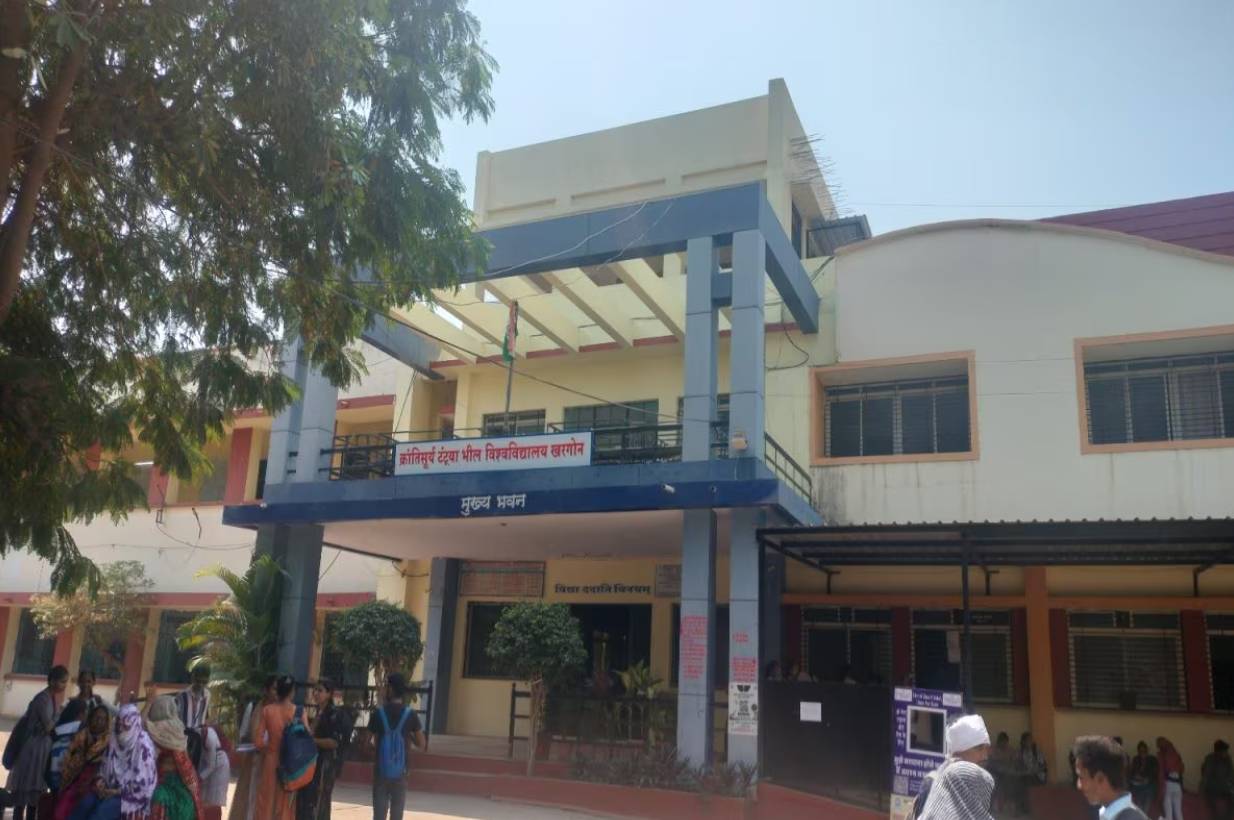
Khargone (Madhya Pradesh): Nineteen months after it was set up with fanfare in the tribal-dominated south-west of Madhya Pradesh, Krantisurya Tantya Bhil University finds itself at the centre of a national debate — the varsity has 25,000 enrolled students, 140 sanctioned teaching posts and not a single permanent teacher on its rolls.
Named after celebrated tribal freedom fighter Tantya Bhil, also known locally as Tantya Mama, the state university was projected as a symbol of empowerment and a milestone in taking higher education to marginalised communities. Today, however, it stands as a stark example of how ambitious announcements without timely recruitment and infrastructure can leave students stranded in half-functional institutions.
140 sanctioned posts, all lying vacant
In a written reply during the ongoing Budget Session of the Madhya Pradesh Vidhan Sabha, Higher Education Minister Inder Singh Parmar admitted that all 140 sanctioned academic posts at Krantisurya Tantya Bhil University are vacant 0 permanent teachers. The sanctioned strength includes 80 assistant professors, 40 associate professors and 20 professors, but none of these positions has been filled so far.
Facing questions from Congress MLA Dr Jhuma Solanki, the minister further said that it was not possible to give a clear time frame for when the vacancies would be filled, even though recruitment is officially described as “underway”. For thousands of students already admitted to various courses, that uncertainty has translated into an academic journey heavily dependent on stopgap arrangements.
University running on deputation and guest faculty
According to the state government’s reply and subsequent media reports, teaching work at the Khargone-based university is being carried out largely by teachers on deputation and a small pool of guest faculty, while permanent posts lie vacant. Seven academic posts have reportedly been filled through deputation and around 14 positions via guest teachers to keep classes running on a basic level.
The university currently offers undergraduate courses in agriculture, arts, commerce and science, along with a postgraduate programme in commerce, yet all of these are being run without a single regular faculty member anchored to the institution. Even the university building is still not fully permanent, with proposals and detailed project reports for a new campus under various stages of approval, according to state officials.
Students complain of delayed exams and results
Dr Jhuma Solanki, the three-time Congress MLA from the Bhikangaon (ST) constituency who raised the issue in the Assembly, has alleged that students are already paying the price for this vacuum in permanent staff. She pointed out that examinations are not being held on time, results are delayed, several courses that students want to pursue are yet to start, and even when exams are conducted, mark sheets are often not issued promptly.
Without timely mark sheets, many students are struggling to apply for scholarships or further admissions, creating a chain reaction of academic and financial setbacks. Solanki has also highlighted the absence of a fully functional executive council, raising questions about how key academic and administrative decisions are being taken in the university’s formative years.
Part of a wider crisis in MP’s state universities
Krantisurya Tantya Bhil University is not an isolated case but part of a wider pattern of vacancies and fragile teaching infrastructure across Madhya Pradesh’s state university system. In Chhindwara, Raja Shankar Shah University — another institution named after a tribal icon — reportedly has 100 sanctioned teaching posts lying vacant, with courses being handled by a handful of temporary teachers.
A similar situation has been reported at Krantiveer Tatya Tope University in Guna, where several undergraduate and postgraduate courses are being run without permanent teachers, and at other recently created universities in Bundelkhand and Sagar regions. An official reply in the Vidhan Sabha revealed that across Madhya Pradesh’s 17 government universities, 793 of 1,069 sanctioned assistant professor posts — roughly 74 per cent — remain vacant, and five universities do not have a single regular assistant professor.
Government promises speedy recruitment
Responding to criticism from the Opposition, Higher Education Minister Inder Singh Parmar has said that the state has instructed all vice chancellors and registrars to complete recruitment to vacant teaching posts within four to five months. He has also cited central government directions asking universities nationwide to fill vacancies by June 2026, adding that Madhya Pradesh is working to comply with that timeline.
At Raja Shankar Shah University in Chhindwara, officials have indicated that interviews for permanent teachers may begin by late 2026, with a target of completing recruitment by 2027, though that schedule appears to clash with the minister’s shorter deadline. For students at Krantisurya Tantya Bhil University, Bengal-style timelines on paper offer little comfort unless they translate into faculty in classrooms and a regular academic calendar on the ground.
Tribal icon’s name, tribal students’ future
The controversy carries a strong symbolic charge because Krantisurya Tantya Bhil University was created in July 2024 specifically to strengthen higher education in a tribal-dominated belt of Madhya Pradesh, where around 22 per cent of the state’s population belongs to Scheduled Tribes and over 80 Assembly seats have significant tribal presence. The university’s very name invokes the legacy of Tantya Bhil, a 19th century tribal freedom fighter who is revered as a hero across the region.
Education activists argue that leaving such institutions without regular teachers sends a contradictory message — while governments celebrate tribal icons in speeches and election slogans, the youth who study in universities named after those icons are left to navigate an under-resourced system.[web:64] Students and local representatives have demanded that recruitment to Krantisurya Tantya Bhil University be fast-tracked and monitored transparently to ensure that the promise of tribal-focused higher education does not remain confined to foundation-stone ceremonies.
Students demand accountability and clarity
On the ground, students say they want more than assurances — they want clear timelines, transparent recruitment and regular communication from university authorities and the state government. Many have spoken about classes being clubbed, papers remaining uncovered and academic workloads falling on a small number of temporary teachers who are juggling multiple subjects at once.
Student leaders have warned that unless the recruitment logjam is resolved, the degrees obtained from such universities risk being devalued in the job market, as employers increasingly look at the quality of teaching and campus infrastructure while assessing candidates. They have called for regular audits of faculty strength, publication of vacancy and recruitment data, and active involvement of students in academic planning bodies.
What lies ahead
With the issue now drawing national attention, all eyes will be on how quickly Madhya Pradesh moves from statements to appointments in its new state universities, particularly those named after tribal freedom fighters. For Krantisurya Tantya Bhil University, the immediate test will be whether recruitment drives begin in earnest, permanent faculty are appointed, and a stable academic calendar is put in place before another batch of students passes through without seeing a fully staffed campus.
Until then, the stark phrase “25,000 students, zero permanent teachers” will continue to define the Khargone university’s image — a reminder that building a university is about much more than inaugurating a name; it is about investing in teachers, classrooms and the academic future of young people who look to higher education as a route out of deprivation.