



PM Modi Launches India’s Fastest Metro: Namo Bharat Rapid Rail & Meerut Metro Corridor Boosts NCR Connectivity
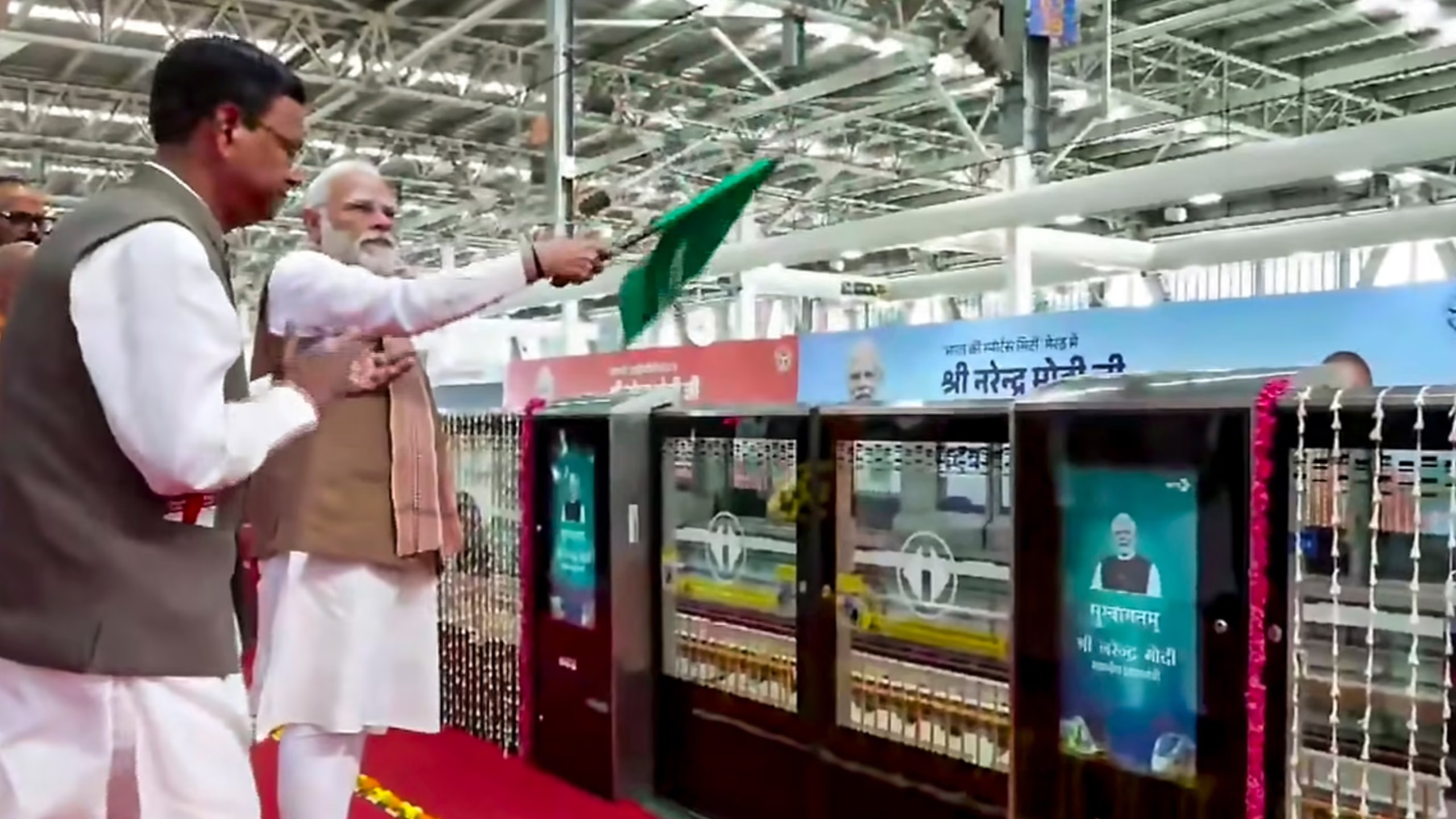
Prime Minister Narendra Modi on Sunday inaugurated India’s fastest metro service with the launch of the Namo Bharat rapid rail corridor and the Meerut Metro, a transformative infrastructure initiative that promises to slash travel time between Delhi and Meerut while boosting connectivity across the sprawling National Capital Region (NCR).
The event, held amidst great fanfare in Meerut, marks a major milestone in India’s urban mobility evolution, connecting the industrial hub of western Uttar Pradesh with the national capital through a high‑speed, semi‑high‑speed rail network designed for efficiency and sustainability. This 82.15 km corridor, featuring 16 elevated stations, will operate at speeds up to 160 kmph, making it the country’s quickest metro‑style service and a game‑changer for commuters, businesses and regional development.
• Speed: Up to 160 kmph – India’s fastest metro service.
• Route: Sahibabad (Ghaziabad) to Modipuram (Meerut) via 16 stations.
• Travel Time: Delhi to Meerut in just 60 minutes.
• Capacity: 25 trains, each carrying 1,120 passengers.
• Cost: ₹30,000 crore investment under Modi government
From Dream To Reality: The Namo Bharat Journey
The Namo Bharat Rapid Rail, originally conceptualised as the Regional Rapid Transit System (RRTS), has been a flagship project of the Modi government since its announcement in the 2018 Union Budget. What began as an ambitious plan to create a world‑class transit network for India’s mega cities has now materialised as a fully operational corridor serving millions in the Delhi–NCR corridor, with Meerut becoming the first major extension beyond Ghaziabad.
Prime Minister Modi, while flagging off the first train from a ceremonial platform in Meerut, described the project as a “gift to the people of Uttar Pradesh and the entire NCR” that would unlock economic potential, reduce road congestion and promote green mobility. He highlighted how the rapid rail integrates seamlessly with the existing Delhi Metro, Indian Railways and buses, creating a multi‑modal transport ecosystem for seamless urban travel.
Technical Marvel: Specs That Set Namo Bharat Apart
| Feature | Details |
|---|---|
| Max Speed | 160 kmph (operational), 180 kmph (design) |
| Train Type | EMU with regenerative braking (30% energy savings) |
| Capacity | 1,120 passengers per train (16 coaches) |
| Stations | 16 elevated stations with platform screen doors |
| Daily Ridership (Projected) | 5 lakh passengers |
| Green Features | Solar panels, rainwater harvesting, 100% electrification |
| Fare | ₹10 to ₹150 (distance-based, affordable) |
Engineered by a consortium led by Alstom and Larsen & Toubro, the Namo Bharat trains feature state‑of‑the‑art technology including aerodynamic design for high speeds, advanced signalling systems and passenger amenities like Wi‑Fi, CCTV and air‑conditioning throughout. The elevated viaduct, spanning challenging terrains including the Yamuna river and Hindon river crossings, incorporates earthquake‑resistant structures and noise barriers for minimal environmental impact.
Meerut Metro: The Perfect Complement
Alongside the rapid rail, PM Modi also inaugurated the 14.2 km Meerut Metro Phase‑I, connecting the city’s key areas including the railway station, bus stand and industrial zones with modern elevated stations and driverless operations. This ₹5,594 crore project, fully funded by the Uttar Pradesh government with central assistance, integrates with the Namo Bharat at Meerut South station, allowing commuters to switch modes effortlessly for end‑to‑end NCR travel.
Local leaders and industry representatives hailed the development as a “boon for Meerut’s handloom and manufacturing sectors,” predicting a surge in workforce mobility and supply chain efficiency that could attract fresh investments to the region.
Economic Ripple Effect Across NCR
Analysts project that the Delhi–Meerut corridor will catalyse real estate growth, create thousands of direct and indirect jobs in construction, operations and tourism, while decongesting NH‑58 which currently handles over 1.5 lakh vehicles daily. The government anticipates a 20–30% reduction in road accidents and fuel consumption, contributing to India’s net‑zero mobility goals by promoting public transport over private vehicles.
- Business Boost: Shorter commutes enable skilled workers from Meerut to access Delhi jobs daily.
- Tourism Surge: Easier access to Meerut’s historical sites like the Augarnath Temple and Gandhi Bagh.
- Student Mobility: Affordable fares connect universities across NCR seamlessly.
- Environmental Win: Electric trains cut CO2 emissions by an estimated 1.5 lakh tonnes annually.
Vision For Future Expansions
This launch is just the beginning, with the government outlining ambitious plans for Phase‑II extensions reaching Panipat and Alwar, creating a 300+ km RRTS network encircling Delhi by 2030. PM Modi announced that similar rapid transit corridors are in advanced stages for Bengaluru–Mysuru, Pune–Ahmedabad and Trivandrum–Kasargod, positioning India as a global leader in urban rail innovation.
“Today, Meerut joins the league of modern cities. Tomorrow, every corner of India will experience this speed of development,” the Prime Minister affirmed, dedicating the projects to the nation on the eve of his government’s infrastructure push anniversary.