




44 Maoists surrender in Bastar as security forces intensify final push before anti-insurgency deadline
In a major development from Chhattisgarh’s Bastar region, 44 Maoist cadres surrendered across multiple districts while security forces reported large recoveries of arms and cash, underlining the shifting momentum in the anti-Maoist campaign.
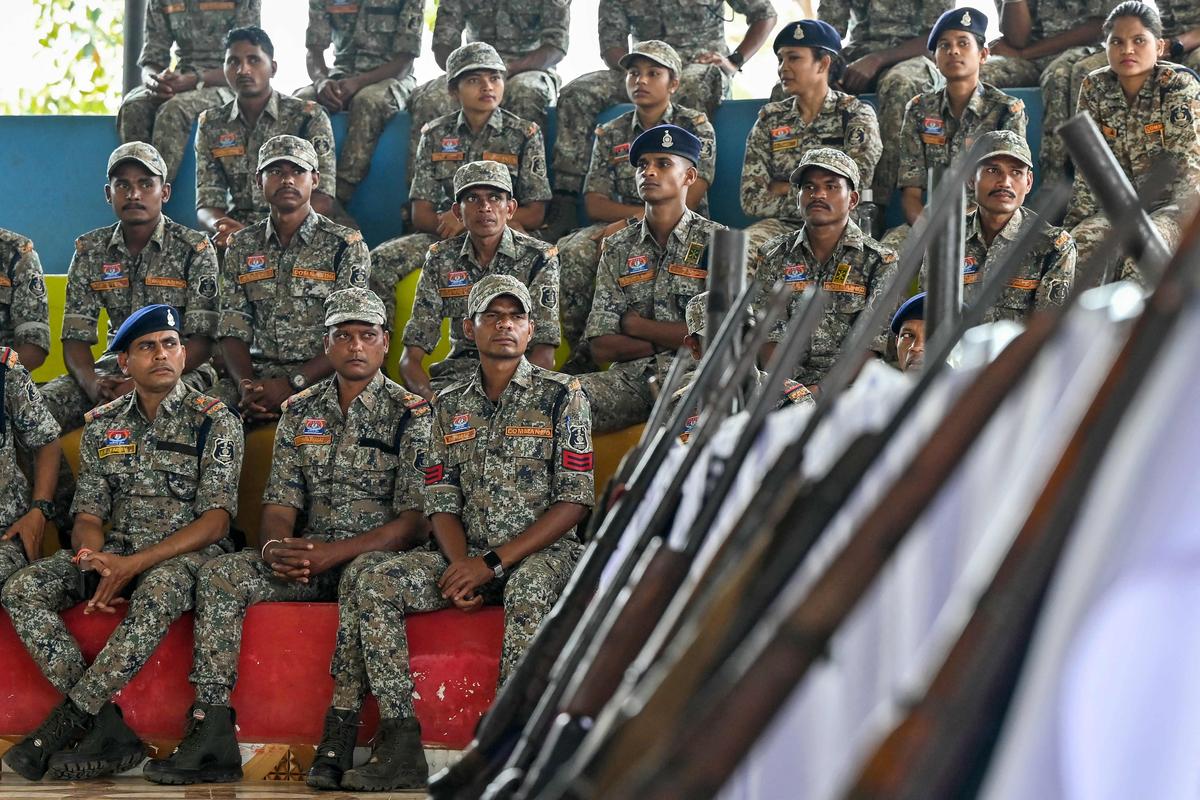
44 Maoists surrender in Bastar as security forces intensify final push before anti-insurgency deadline
The surrender of 44 Maoist cadres across the Bastar region has emerged as one of the most closely watched developments in Chhattisgarh’s internal security landscape at the close of March, especially because it came alongside the Centre’s declared timeline to eliminate Left Wing Extremism from the country. Officials described the coordinated surrender as a significant marker in the ongoing security push, with reports indicating that the action spanned several districts and was supported by sustained field operations, intelligence-based outreach, and local confidence-building efforts among vulnerable communities.
For Bastar, a region that has for decades symbolised the core theatre of India’s Maoist insurgency, the surrender carries both operational and political weight. It is not merely the number of cadres laying down arms that matters, but the broader message it sends: that the state’s twin strategy of pressure on armed formations and rehabilitation for those willing to return to the mainstream is beginning to reshape the security narrative on the ground. The timing has added even more significance, as authorities had repeatedly urged underground cadres to avail themselves of rehabilitation benefits before the deadline window closed.
Why this development matters
Reports indicate that the latest surrender took place across four districts in the Bastar region, reflecting a wider territorial impact rather than an isolated district-level event. Security officials have linked the rise in surrenders to continuous anti-Maoist operations, improved intelligence gathering, targeted contact with local networks, and the cumulative pressure created by shrinking safe zones in forested pockets once seen as Maoist strongholds.
The significance of the episode also lies in the message it sends to the remaining armed cadres. When such surrenders occur in clusters, they indicate weakening morale within the insurgent structure, concern over dwindling mobility, and growing uncertainty among lower and middle-rung members about the future of the movement. For the administration, this creates an opening to push both policing and rehabilitation in parallel, reducing the possibility of regrouping by splinter elements.
Authorities have been presenting the Bastar campaign as part of the final phase of a broader anti-Maoist effort, and the latest coordinated surrender is being viewed as a milestone in that push.
Recoveries deepen the impact
Apart from the surrender numbers, what makes the development especially noteworthy is the scale of recoveries reported alongside recent operations in Bastar. Media reports on the deadline-day action and parallel security developments pointed to substantial seizures of weapons and cash from Maoist-linked dumps, reinforcing the view that surrender drives are now increasingly intersecting with actionable intelligence on hidden logistics networks. Such recoveries matter because they go beyond symbolism; they directly affect the insurgents’ operational capacity, mobility, and ability to sustain armed activity.
Different reports have cited significant quantities of weapons being recovered in Bastar’s districts, while one report on the same deadline-day security push referred to cash worth about ₹2.9 crore and seven kilograms of gold being recovered from Maoist dumps. Another recent Bastar operation earlier in March involving the surrender of 108 Maoists had also led to the seizure of cash worth ₹3.61 crore, gold valued at around ₹1.64 crore, and 101 weapons, showing the scale of financial and military resources that security forces are now tracing and dismantling in the region.
Pressure of the March 31 deadline
The broader backdrop to the story is the Union government’s stated March 31, 2026 deadline to eliminate Left Wing Extremism, a timeline that shaped the official messaging around the surrender. Across recent weeks, security and administrative officials repeatedly called upon Maoist cadres to surrender and make use of rehabilitation provisions while the window remained open, presenting the offer as a final opportunity before intensified enforcement.
That context is important because deadline-based campaigns often work not only through physical operations but through psychological impact. Cadres already facing attrition, limited supply lines, and fear of arrest or encounter become more receptive when they believe the balance on the ground has decisively shifted. In Bastar, where local terrain and social networks historically gave Maoist groups resilience, such a change in perception can have long-term implications.
Bastar’s changing ground reality
Bastar has long been central to the Maoist movement’s military and ideological footprint, making every major surrender there more consequential than it might appear in raw numbers alone. Over the years, the insurgency used the region’s dense forests, remote habitations, and governance gaps to build durable support structures. But recent developments suggest that those enabling conditions are being challenged more systematically than before.
One indicator of that changing reality is the scale of accumulated surrenders in districts such as Narayanpur. According to reporting on the latest surrender episode, Narayanpur alone recorded 302 Maoist surrenders in 2025–26, with 270 weapons recovered during that period. These figures suggest that authorities are not dealing with a single spike, but with an extended sequence of attrition in Maoist ranks.
The state’s counterinsurgency messaging has also increasingly leaned on rehabilitation narratives, attempting to separate hardened armed leadership from those cadres who may be willing to re-enter civilian life. In operational terms, that strategy can serve a dual purpose: weakening the organisational chain from below while simultaneously generating fresh local intelligence for future operations. The latest Bastar surrender appears to fit squarely within that framework.
Implications for Chhattisgarh and beyond
The implications of the development extend beyond Bastar and even beyond Chhattisgarh. Bastar has long had symbolic value in the national Maoist map, so a sustained wave of surrenders there strengthens the central and state governments’ argument that the insurgency has entered a weakened phase. It also raises expectations that similar approaches combining security pressure, local outreach, and rehabilitation incentives may be replicated or intensified in other Left Wing Extremism-affected pockets.
At the same time, the path ahead is unlikely to be linear. History shows that insurgent movements under pressure may fragment, disperse, or attempt tactical adaptation. That is why officials will likely be judged not only by the volume of surrenders and seizures, but by whether governance, road connectivity, welfare delivery, policing access, and confidence among tribal communities deepen in the aftermath. Without those elements, tactical gains can struggle to translate into lasting stability.
For now, however, the surrender of 44 Maoists across Bastar marks a politically resonant and operationally significant moment. Coming at the edge of the government’s anti-LWE deadline and amid reports of substantial recoveries from Maoist-linked caches, it reflects a clear attempt by the state to demonstrate that the campaign has moved from containment to consolidation. Whether this becomes a turning point in Bastar’s long conflict story will depend on what follows next, but the immediate signal from the ground is unmistakable: the balance is being contested more aggressively than ever before.
For news audiences across India, the story also captures a larger shift in how the Maoist conflict is now being framed. The emphasis is no longer only on encounters and casualties; it is increasingly on surrenders, recoveries, rehabilitation, and the collapse of underground support systems. That shift matters because it points to a contest over legitimacy as much as territory. In that contest, every surrender weakens the insurgent claim to political relevance, while every recovery of hidden money, gold, or arms highlights the shrinking space available to sustain the movement.
State Correspondents will continue to track developments from Bastar, including district-wise security trends, surrender patterns, and the administrative follow-up to rehabilitation promises. The coming weeks will show whether the deadline moment produces a temporary surge or becomes the foundation for a durable decline in Maoist influence across one of India’s most contested regions.
Tags:
Like and Follow State Correspondents Facebook Page Latest International News Iran US War Subscribe for alerts© 2026 State Correspondents. All rights reserved.