




India’s Defence Leap: Rs 3.25 Lakh Cr Rafale Jet Deal & P-8I Aircraft Approved to Supercharge Air & Maritime Power
By State Correspondents News Desk | February 13, 2026 | New Delhi
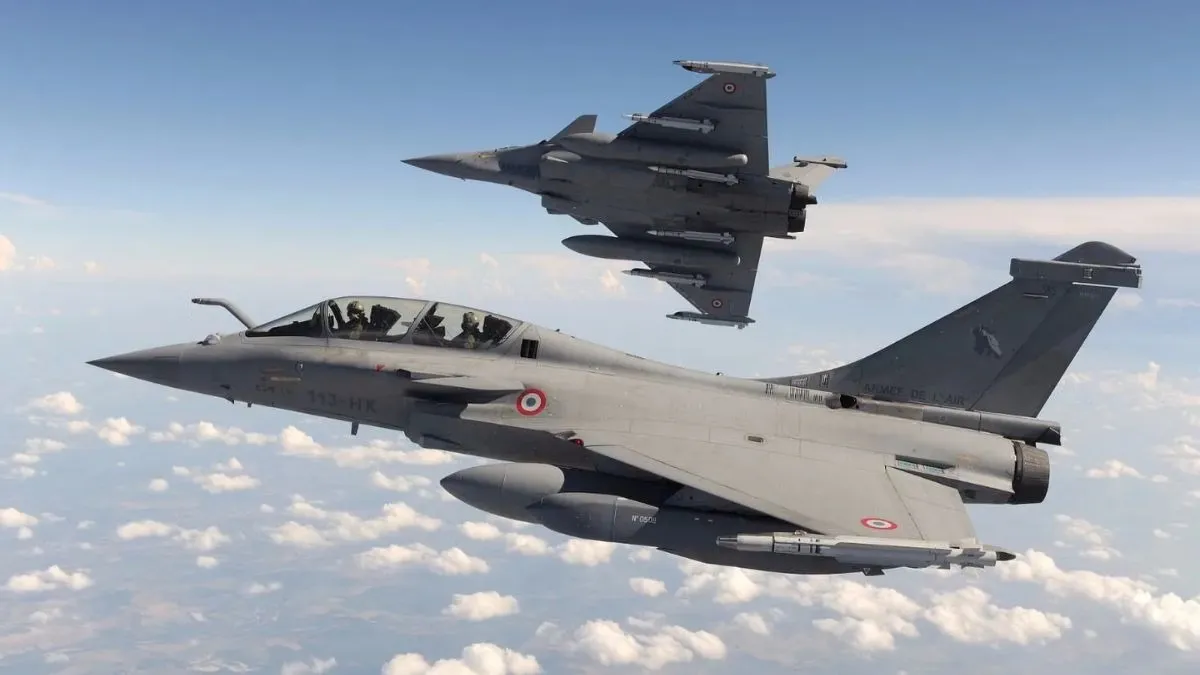
India has greenlit one of its largest-ever defense acquisitions, approving a staggering Rs 3.6 lakh crore ($40 billion) package that includes 114 advanced Rafale multi-role fighter jets for the Indian Air Force (IAF) and six additional Boeing P-8I Poseidon maritime patrol aircraft for the Navy. Chaired by Defence Minister Rajnath Singh, the Defence Acquisition Council (DAC) granted Acceptance of Necessity (AoN) on February 12, 2026, paving the way for rapid procurement amid rising regional threats.
This landmark decision, timed ahead of French President Emmanuel Macron’s visit from February 17-19, underscores deepening Indo-French defense ties and aligns with Prime Minister Narendra Modi’s vision for self-reliance through ‘Make in India’. The Rafale component alone is valued at Rs 3.25 lakh crore, positioning it as India’s biggest single military buy.
Rafale Fleet Expansion: Powering IAF’s Multi-Role Dominance
The IAF, grappling with squadron shortages below the sanctioned 42, will induct 114 Rafales under a strategic partnership model. Of these, 18 will be flyaway jets from Dassault Aviation for swift deployment, while 96 will be manufactured domestically with 30% indigenous content, integrating Indian weapons and avionics.
Building on the 36 Rafales inducted since 2019 and Navy’s 26 Rafale-Ms, this deal elevates the fleet to over 170 platforms. Enhanced with F4-standard upgrades like improved radar, electronic warfare suites, and BrahMos integration, Rafales will excel in air superiority, deep strikes, and nuclear deterrence roles.
P-8I Poseidon: Bolstering Maritime Surveillance Edge
The Navy gains six more P-8Is, augmenting its existing 12, for a total of 18 long-range maritime reconnaissance aircraft. Valued at over $3 billion, these platforms feature indigenous electro-optical/infrared sensors, torpedoes, and Harpoon missiles, extending anti-submarine warfare (ASW), intelligence, and strike capabilities across the Indian Ocean Region (IOR).
Critical against Chinese naval expansion, P-8Is offer 12-hour endurance, covering 7,200 km radii, vital for monitoring adversaries from Malacca Strait to Arabian Sea.
Procurement Roadmap and Economic Multipliers
Post-AoN, processes advance to vendor selection, cost negotiations, and Cabinet Committee on Security (CCS) nod. Domestic production at HAL or private firms will create thousands of jobs, infuse tech transfers, and spur MSME growth, embodying Atmanirbhar Bharat.
| Platform | Quantity | Value (Rs Cr) | Lead Integrator | Indigenous Content |
|---|---|---|---|---|
| Rafale MRFA | 114 | 3,25,000 | Dassault/HAL | 30% |
| P-8I MPA | 6 | 25,000+ | Boeing | High (Sensors) |
| Do-228 ICG | 8 | 2,312 | HAL | 100% |
Strategic Imperatives Driving the Surge
With IAF squadrons dipping to 31 against 42 needed, and Navy facing sub threats in IOR, these assets counterbalance China’s J-20s and Type 095 subs. Rafales enhance two-front deterrence along LAC/LoC, while P-8Is secure SLOCs vital for 80% oil imports.
The package also includes Rs 2,312 crore for eight HAL Do-228s with EO/IR for Coast Guard, rounding out tri-service modernization.
Global Partnerships and Future Horizons
Indo-French collaboration, post-2016 MMRCA, now eyes engine co-development and sustainment hubs. US ties via P-8I FMS reinforce Quad synergy against shared challenges.
Critics flag costs amid fiscal pressures, but proponents highlight lifecycle savings and deterrence value. As CCS deliberates, this procurement heralds a robust, indigenous defense posture for India’s rising global stature.