




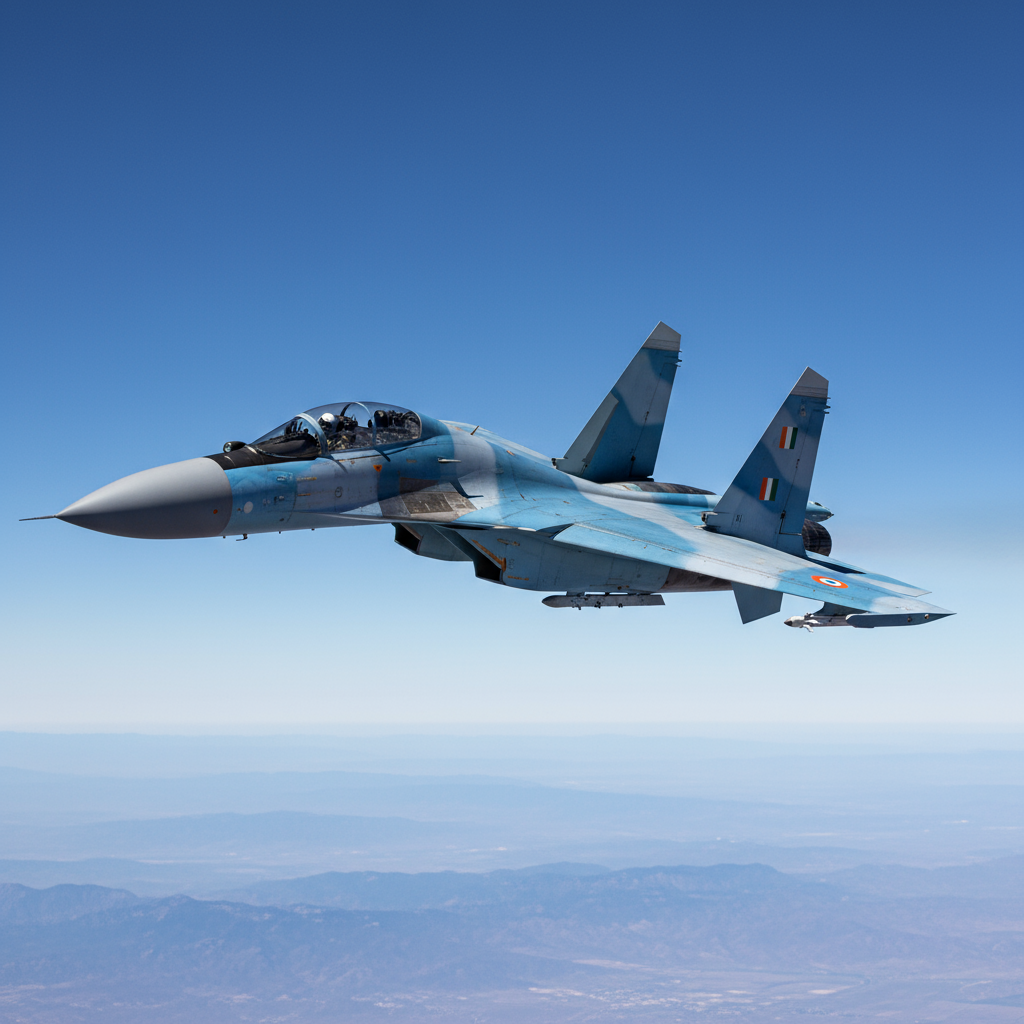
Su-30 MKI fighter jets of the Indian Air Force on a strategic drill, simulating combat scenarios in the Himalayas.
Operation Overview
The Indian Air Force (IAF) began a week-long, large-scale military exercise on September 22, 2025, near India’s sensitive northern borders with China and Nepal. The operation is taking place in strategic sectors close to Tibet’s Ngari Gunsa airbase—an area regarded as a focal point of Indo-Chinese military attention. The high-altitude setting, often exceeding 4,200 meters, poses rigorous operational and logistical challenges for both air and ground crews.
Strategic Significance
– This region is of acute strategic importance: the Line of Actual Control (LAC) has been a flashpoint for India-China military tensions.
– The vicinity to Nepal adds another layer of complexity, with Nepal acting as a buffer between India and China in recent years.
– India remains Nepal’s dominant trade partner, and stability in this region is vital for New Delhi’s regional security interests.
Objectives and Exercises Details
The IAF’s drills are designed to:
- Test operational agility and high-altitude readiness, including complex aerial tactics and rapid deployment missions.
- Demonstrate credible deterrence to potential adversaries by showcasing aerial strength in a politically charged environment.
- Foster joint operational planning and reinforce inter-services coordination, with central monitoring from Bareilly Air Base.
Geopolitical Context
The drills are being held amid heightened regional activity: Nepal is undergoing significant political changes, and China continues to modernize its infrastructure along the border. By conducting visible military maneuvers at this delicate juncture, India signals readiness and strategic intent to safeguard its frontiers and support regional stability.
Expert Insights & Impact
Defense analysts view this exercise as a robust move to reinforce deterrence, boost troop confidence, and assure Indian citizens living in border areas. Coordination with civil aviation, real-time monitoring by defense commands, and simulation of peak-winter operational scenarios reflect the IAF’s focus on preparedness for any eventuality in the Himalayas.