




Congress Told To Vacate Akbar, Raisina Road Offices By Saturday, Sparks ‘Suppression’ Charge Against Centre
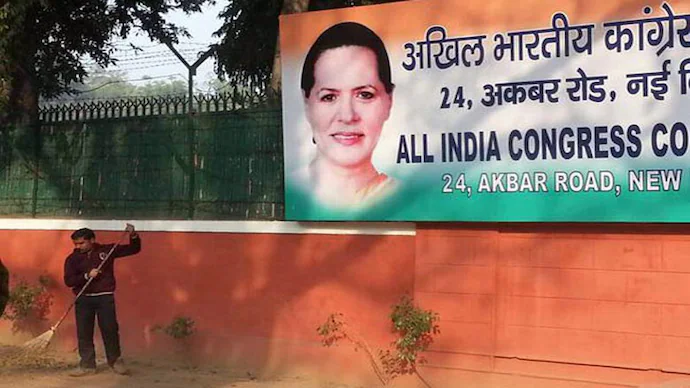
In a move that has set off a fresh political flashpoint in the national capital, the Congress party has been served final eviction notices to vacate its historic headquarters at 24 Akbar Road and the Indian Youth Congress office at 5 Raisina Road in Lutyens’ Delhi by Saturday, March 28, with senior leaders terming the step “politically motivated” and an attempt to “silence the main opposition voice”.
Final Notice For 24 Akbar Road And 5 Raisina Road
According to sources in the Estates Department and within the party, the latest communication amounts to a final eviction notice directing the Congress to hand over possession of 24 Akbar Road and 5 Raisina Road by March 28. The Akbar Road bungalow has functioned as the party’s central headquarters since 1978, while the Raisina Road premises house the Indian Youth Congress and allied frontal organisations.
Officials have cited repeated reminders and earlier communications, pointing out that once the party was allotted land for a permanent office at Kotla Marg — where the new Indira Bhavan now stands — it was expected under the Directorate of Estates rules to surrender older government-allotted bungalows in the Lutyens’ Bungalow Zone. The latest notice comes after what sources describe as “multiple opportunities” given to vacate the old addresses.
Television visuals and party insiders confirm that the notice has set a strict deadline ending this Saturday, triggering hectic consultations in the Congress war room on both legal and political responses. Leaders concede that even if the party had anticipated such a move, the time window offered in the final notice is “extraordinarily short” for such a crucial shift.
- The Congress must vacate 24 Akbar Road, its headquarters since 1978, by March 28.
- The Indian Youth Congress office at 5 Raisina Road has been covered under the same eviction deadline.
- The notices have been issued by the Estates Department under the Ministry of Housing and Urban Affairs.
- Officials cite rules against political parties holding multiple Lutyens’ properties after being allotted permanent land elsewhere.
Historic Akbar Road: From Power Address To Exit Notice
Few political addresses in independent India carry the symbolism of 24 Akbar Road. For almost half a century, the sprawling bungalow has been the nerve centre of the Congress organisation, witnessing the rise and fall of multiple leaderships, the formation of coalition governments, midnight strategy meetings and dramatic press conferences after election verdicts.
The property’s importance is not just administrative but deeply emotional — party workers and state leaders from across India have long associated their visits to Delhi with a mandatory stop at Akbar Road, which housed the AICC war room, briefing halls and the president’s political secretariat. The ordered exit is therefore seen within the party as more than a routine estate decision; for many Congress workers, it marks the end of an era.
The Raisina Road office, though smaller in scale, has been no less critical for the party’s future bench. It has nurtured the Indian Youth Congress and student leaders who often graduated to higher roles in Parliament and state politics. For the party’s younger generation, the Raisina premises have served as a political training ground and a symbol of continuity in Delhi’s central political landscape.
Congress Cries ‘Suppression’, Sees Political Motive
As news of the notices surfaced, Congress leaders were quick to allege that the government was using administrative rules as a weapon to shrink the main opposition party’s political footprint in the capital. Senior Congress functionaries said the move comes at a time when the party is challenging the ruling BJP on multiple fronts and termed the timing “far from coincidental”.
Abhishek Manu Singhvi, Rajya Sabha MP and senior Supreme Court lawyer, has reportedly been asked to lead the legal team studying the notice and preparing a challenge. According to media reports quoting party sources, Singhvi has called the decision “illegal and politically motivated”, signalling that the party intends to mount a robust defence and not simply walk out of its long-held premises.
Other leaders have framed the episode as part of a broader pattern of “institutional pressure” on opposition forces, citing earlier disputes over bank accounts, tax demands and the freezing of party funds. On social media, several Congress workers described the eviction order as an attempt to “erase the party’s history from Lutyens’ Delhi”, amplifying the charge that the government is trying to physically and symbolically push the party out of the power zone.
“The BJP government is not behaving like a democratic government. This action is clearly selective and politically driven. Let the notice reach us; we will respond after due consultation,” Congress MP Pramod Tiwari was quoted as saying, as the party hinted at both legal and political pushback.
Centre’s Defence: ‘Just Implementing Estate Rules’
Government officials, however, insist that the notices are not targeted or extraordinary, arguing that the Directorate of Estates has merely reminded the party of rules that apply to all political outfits occupying government bungalows. Under existing norms, once a party is allotted land to construct a permanent headquarters, it is required to vacate any earlier accommodation in the elite Lutyens’ Bungalow Zone.
Officials also point to the fact that similar reminders were issued in previous years and that the Congress had been aware since the allotment of the Kotla Marg plot that its tenure at Akbar Road would not be indefinite. Some reports note that the party has been paying higher “market rent” on the Akbar Road property after the earlier license term lapsed, which the government views as a transitional arrangement and not a basis for permanent retention.
Supporters of the move within the ruling establishment argue that retaining multiple prime bungalows in the capital’s most expensive zone is “unjustifiable” when the party already has a new custom-built headquarters. They frame the decision as part of a broader effort to rationalise estate usage and free up scarce government housing stock, especially in a zone that has long been criticised as a symbol of privilege and unequal access.
Indira Bhavan: The New Nerve Centre Waiting In The Wings
The Congress, for its part, has already invested in transitioning to its new headquarters, Indira Bhavan, on Kotla Marg near ITO in central Delhi. The building — equipped with modern media facilities, digital war rooms and larger meeting spaces — was formally inaugurated last year, and senior leaders have often showcased it as a sign of the party’s renewal.
Yet, the party continued to operate substantial chunks of its day-to-day organisational machinery out of 24 Akbar Road, partly out of habit and partly because of the weight of tradition associated with the old address. Many state units and visiting delegations still routed their Delhi programmes through Akbar Road, making the actual shift more complicated than it might appear on paper.
In private, some Congress insiders acknowledge that a full transition to Indira Bhavan was always going to be necessary, but argue that the Centre’s sudden insistence on a tight deadline, barely giving them a week from the formal notice to vacate, has converted what could have been an administrative adjustment into a full-blown political flashpoint.
Legal Battle And Political Messaging Ahead
With the March 28 deadline looming, the Congress is now preparing a two-pronged response. On the legal front, its team is expected to quickly move court seeking a stay on the eviction order, likely arguing that the notice period is arbitrary and that the party has not been given reasonable time to relocate sensitive files, equipment and organisational infrastructure.
Politically, the party is likely to use the episode to press its narrative of “democratic backsliding” under the current government, portraying the eviction as an attempt to shrink opposition space not just inside Parliament but also in the physical geography of Delhi’s power corridors. Protests, press conferences and symbolic visits by senior leaders to Akbar Road and Raisina Road are all on the table as the party looks to convert administrative pressure into a rallying point for its cadre.
The ruling BJP, in turn, is expected to underline that the Congress is not being singled out and that estate norms must be enforced uniformly. If the matter reaches court, the legal proceedings themselves could keep the issue alive in public debate for weeks, turning a bungalow allotment dispute into a high-visibility test case on the boundaries between administrative rules and political rivalry.
Symbolism Of A Possible Exit From Lutyens’ Delhi
Beyond the legal fine print, the story is ultimately about symbolism. For decades, 24 Akbar Road has been shorthand for the Congress high command, just as 11 Ashoka Road once was for the BJP. A forced goodbye to this address, coupled with the potential loss of 5 Raisina Road, would mark a psychological shift in how the party sees itself in Delhi’s power map.
Party strategists point out that while political relevance is not determined by real estate alone, the visual message of being asked to leave the Lutyens’ core at a time of electoral and organisational challenges could dent morale among workers already grappling with back-to-back defeats. The leadership hopes that by reframing the issue as a “fight for democratic space”, it can turn that sense of loss into renewed mobilisation.
For now, all eyes are on Saturday’s deadline — and on whether the government presses ahead with enforcement, the Congress wins temporary relief from the courts, or a compromise formula quietly emerges. Whatever the immediate outcome, the battle over Akbar Road and Raisina Road has already added one more contentious chapter to the increasingly bitter relationship between the Centre and the main opposition party.
Tags:
Like and Follow State Correspondents Facebook Page Latest International News Iran US War Subscribe for alerts© 2026 State Correspondents. All rights reserved.