



Bangladesh Group Seeks Cancellation Of Indian Work Permits, Gives 24-Day Ultimatum Over Osman Hadi Murder
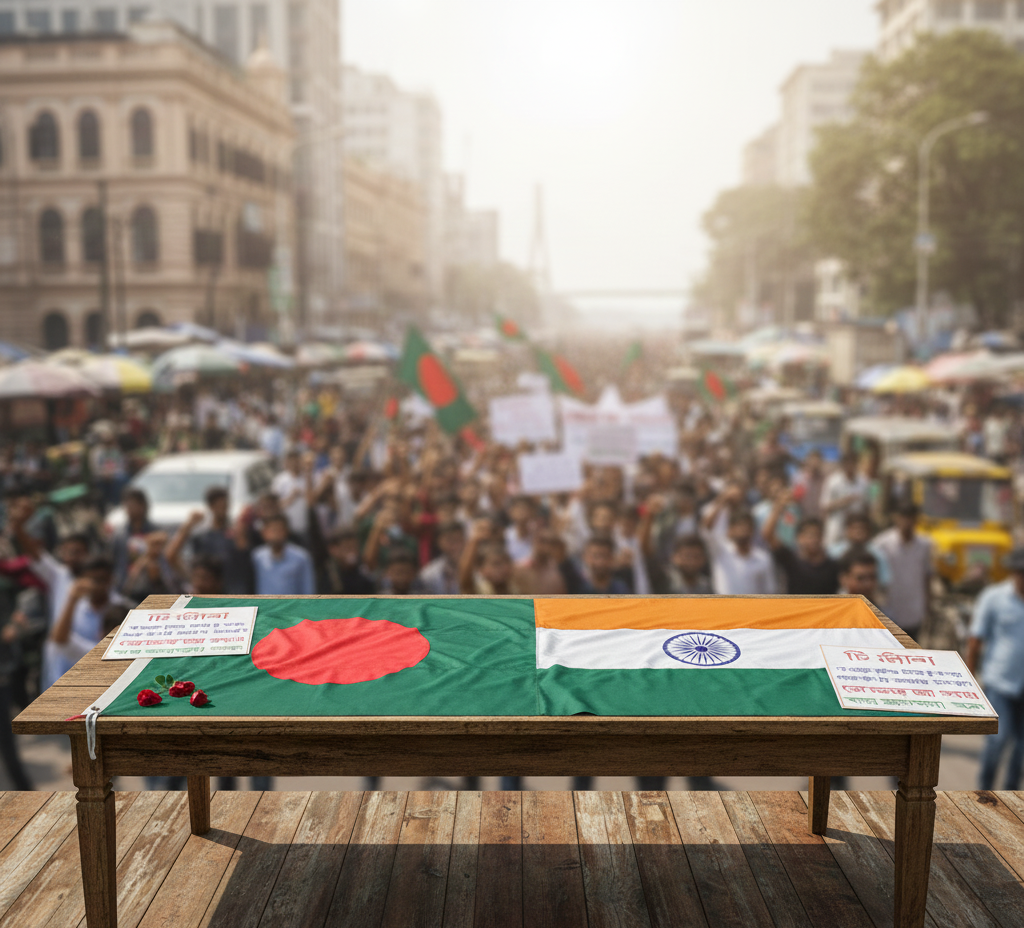
A radical student platform in Bangladesh has escalated pressure on the Muhammad Yunus‑led interim government by demanding the cancellation of work permits issued to Indian citizens and setting a 24‑day deadline to complete the trial in the murder case of its leader, Sharif Osman Hadi. The outfit, Inqilab Moncho (also spelt Inquilab Mancha), announced the ultimatum during a late‑night protest at Dhaka’s Shahbagh intersection, warning of intensified agitation if its demands are ignored.
Who Was Sharif Osman Hadi?
Sharif Osman Hadi, 32, was a vocal anti‑India and anti‑Hasina student leader who founded the Inqilab Moncho platform and emerged as a prominent face in recent street mobilisations. He was shot in the head by unidentified assailants in Dhaka’s Bijoy Nagar area on December 12 and later shifted to Singapore for advanced treatment, but succumbed to his injuries on December 18, sparking widespread protests and arson attacks in parts of Bangladesh.
Four-Point Ultimatum To Yunus Government
Addressing supporters at Shahbagh, Inqilab Moncho member secretary Abdullah Al Jaber read out a four‑point charter of demands aimed at the Yunus-led interim government. The group has framed the ultimatum around accountability for Hadi’s murder as well as punitive steps against Indian nationals allegedly linked to the case.
- Complete the trial of “the entire killing squad” – including the shooter, masterminds, accomplices, escape facilitators and shelter providers – within the next 24 days.
- If Hadi’s alleged killers are not brought back within 24 hours, or if no “specific statement” is issued about their presence in India, all work permits of Indians in Bangladesh should be cancelled.
- If India allegedly refuses to cooperate, Bangladesh should move the International Court of Justice (ICJ) over the matter.
- Arrest what the group calls “fascist culprits” said to be hiding within the civil‑military intelligence establishment in Bangladesh.
Allegations About Suspects Fleeing To India
The ultimatum gained traction after a Dhaka Metropolitan Police official reportedly said two prime suspects, Faisal Karim Masud and Alamgir Sheikh, may have crossed into India through the Haluaghat border in Mymensingh district. Bangladeshi authorities also claimed that two Indian nationals, identified as Purti and Sami, were arrested for allegedly helping the accused cross the border illegally.
The group has used these claims to directly target Indians working in Bangladesh, portraying work permit suspension as leverage to force faster cooperation from New Delhi, even as India’s Border Security Force has reportedly rejected suggestions that the suspects were allowed safe passage.
Dhaka’s Response And India Angle
The Yunus interim administration has not accepted the group’s demands but has indicated that it is closely tracking developments amid rising street protests and volatile rhetoric. Officials are balancing domestic pressure from Hadi’s supporters with the need to protect economic ties and the safety of thousands of Indian professionals and workers currently employed in Bangladesh.
Indian diplomatic and security establishments are also monitoring the situation since any unilateral move to cancel work permits or link Indian nationals to the politically sensitive murder case could strain already delicate India–Bangladesh relations ahead of Dhaka’s February 2026 general elections.
Rising Anti-India Sentiment In Bangladesh
Analysts say the controversy reflects a broader spike in anti‑India sentiment in sections of Bangladeshi politics, with radical groups using Hadi’s killing to mobilise support and question the country’s foreign policy orientation. Bangladesh has been witnessing frequent protests, blockades and clashes as political actors jostle for space before the polls, raising concerns about instability and its impact on foreign workers and investments.