




Beyond the Horizon: Artemis II Crew Begins Epic Return Journey
State Correspondents | Space & Science Special Report
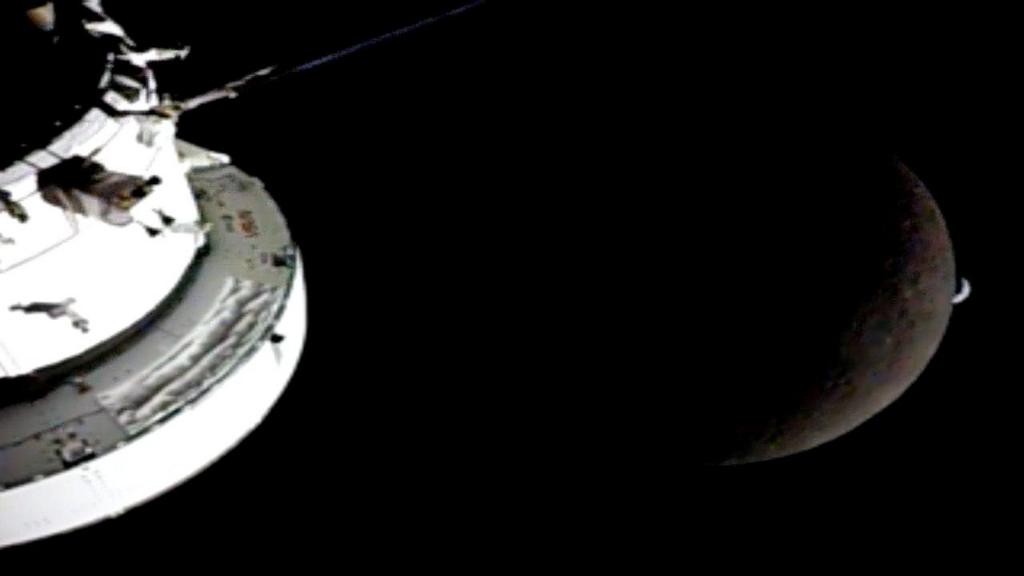
Beyond the Horizon: Artemis II Crew Begins Epic Return Journey.
As the sun set over the Kennedy Space Center on Wednesday, April 8, 2026, the four-person crew of NASA’s Artemis II mission officially turned their gaze away from the lunar surface and toward the pale blue dot of Earth. After completing a historic 10-day flyby that saw humans venture further into the cosmos than ever before, the Orion spacecraft has executed a critical trajectory correction burn, setting a course for a high-stakes splashdown in the Pacific Ocean.
This mission, the first crewed flight beyond low Earth orbit (LEO) since the conclusion of the Apollo era in 1972, has not just revisited old milestones—it has shattered them. On Monday, April 6, the crew passed the record set by the ill-fated Apollo 13 mission, reaching a staggering maximum distance of 252,756 miles (406,771 kilometers) from their home planet.
252,756
Max Miles from Earth
4,000
Miles Above Moon
54 Years
Since Last Moon Visit
A Historic Crew for a New Generation
The Artemis II mission is more than a technical validation; it is a cultural milestone. The crew, led by Commander Reid Wiseman, represents a diverse cross-section of humanity. In the pilot’s seat, Victor Glover became the first person of color to travel beyond LEO, while Mission Specialist Christina Koch became the first woman to reach the lunar vicinity. They are joined by Jeremy Hansen, the first non-U.S. citizen (Canadian Space Agency) to leave Earth’s immediate orbit.
Technical Mastery: The Return Trajectory
The journey home is far from a simple drift. Late on Tuesday, the Orion spacecraft performed the **Return Trajectory Correction-1 (RTC-1) burn**. This 15-second burst using the reaction control thrusters was essential to “fine-tune” the angle at which Orion will hit the Earth’s atmosphere.
Traveling at nearly 25,000 miles per hour, the spacecraft must hit a narrow “entry corridor.” If the angle is too steep, the heat shield could fail; if it is too shallow, the capsule could skip off the atmosphere like a stone on a pond and be lost to space. NASA Flight Director Rick Henfling confirmed that the spacecraft is currently performing within all nominal parameters, despite minor, previously reported issues with the onboard waste management system’s venting nozzle.
The Road to Splashdown: April 10, 2026
The mission is scheduled to conclude on Friday, April 10, 2026. The designated landing zone is in the Pacific Ocean, off the coast of Baja California. The recovery operation will be led by the USS John P. Murtha, a San Diego-based Navy warship. Navy divers and NASA recovery teams have been practicing for months to ensure the “well-well” recovery method—where the capsule is winched into the ship’s flooded deck—is executed perfectly.
Why Artemis II Matters for the Future
Artemis II is the “proof of concept” for the Artemis III mission, which aims to land the first woman and next man on the lunar South Pole by 2027. By verifying that the Orion Life Support Systems can sustain a crew in the high-radiation environment of deep space, NASA is laying the groundwork for the Lunar Gateway and, eventually, the first human footprints on Mars.
For the readers of State Correspondents, this mission is a reminder that the impossible is merely a deadline. As Orion streaks back toward Earth, it carries with it the aspirations of a world that has finally decided to return to the stars.
Tags:
Like and Follow State Correspondents Facebook Page Latest International News Iran US War Subscribe for alerts© 2026 State Correspondents. All rights reserved.