




Andhra Pradesh Unveils ₹3.22 Lakh Crore Budget for 2025-26: A Roadmap for Welfare, Growth, and Swarna Andhra Vision
By State Correspondents News Desk
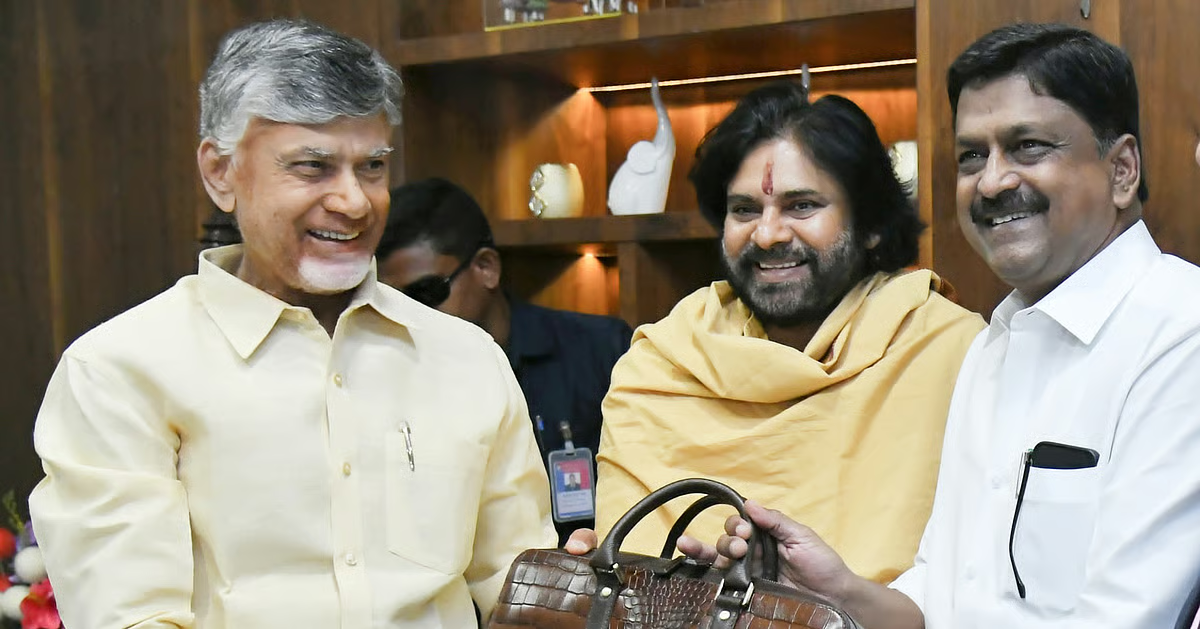
In a bold step towards rebuilding the state’s economy and fulfilling electoral promises, the Andhra Pradesh government has rolled out a massive ₹3.22 lakh crore budget for the financial year 2025-26. Presented by Finance Minister Payyavula Keshav in the state assembly, this outlay marks a 9.48% jump from the previous year, signaling the TDP-led NDA coalition’s commitment to the ‘Swarna Andhra 2047‘ vision. With heavy emphasis on welfare for farmers, women, students, and backward classes, alongside infrastructure pushes like Polavaram irrigation project, the budget aims to balance fiscal prudence with transformative development.
The total expenditure stands at ₹3,22,359 crore, split into revenue expenditure of ₹2,51,162 crore and capital outlay of ₹40,635 crore. Revenue deficit is pegged at ₹33,185 crore (1.82% of GSDP), while fiscal deficit is estimated at ₹79,926 crore (4.38% of GSDP), keeping within sustainable limits amid national economic headwinds. Chief Minister N. Chandrababu Naidu hailed it as a “transformative blueprint” to create a “healthy, wealthy, and happy” society, criticizing past regimes for financial mismanagement that left the state in “chaos.”
At the heart of the Andhra Pradesh Budget 2025-26 are flagship ‘Super Six’ poll promises, now backed by substantial funding to directly benefit millions. Backward Classes welfare jumps to ₹47,456 crore (from ₹39,007 crore last year), minorities get ₹5,434 crore (up from ₹4,376 crore), and women/child welfare rises to ₹4,332 crore. Housing receives ₹6,318 crore, while Dr. NTR Vaidya Seva gets boosts for universal health coverage. These measures are projected to lift household incomes by 15-20% in rural areas, per government estimates, fostering inclusive growth in a state where agriculture employs 60% of the workforce.
Education tops allocations at ₹31,805 crore for schools and ₹2,506 crore for higher education, making it the largest sectoral spend. Initiatives include skill development (₹1,228 crore) and new teacher incentives to reduce dropout rates below 5% by 2027. Health gets ₹19,264 crore, with ₹2,144 crore for reproductive/child health and ₹838 crore under Ayushman Bharat. Jal Jeevan Mission allocation of ₹2,800 crore (plus ₹4,000 crore extra) promises tap water to every household by mid-2026, tackling water scarcity in drought-prone Rayalaseema.
Capital expenditure surges to fuel long-term assets: Polavaram, a pet project of CM Naidu, gets priority to irrigate 10 lakh acres and generate 960 MW hydro power, potentially adding ₹10,000 crore to farm output annually. GSDP is forecasted at ₹18.3 lakh crore, with receipts (ex-borrowings) at ₹2.18 lakh crore, up 24% YoY. Borrowing needs are covered via bonds and Centre aid. New ideas like AP Wealth Fund (₹100 crore seed) invite private equity for infrastructure, while industry/commerce gets ₹3,156 crore for MSME clusters.
Finance Minister Keshav emphasized fiscal discipline: “This budget reconstructs Andhra from financial ruins, aligning with national Viksit Bharat goals.” Tourism, youth affairs (₹469 crore), and Swachh Bharat (₹1,037 crore) round out balanced spends.
Ruling TDP-Jana Sena camp celebrates it as “people-first,” with Deputy CM Pawan Kalyan tweeting: “From farms to classrooms, every rupee counts for Amaraavati’s rise.” Opposition YSRCP, led by Jagan Mohan Reddy’s camp, slams it as “figure jugglery.” MLAs like B. Rajendranath Reddy argue welfare funds are “inadequate” for promises, Polavaram underfunded, and Amaravati revival vague. Congress echoes concerns over debt sustainability amid global tensions like Iran-Israel conflict spiking oil prices.
YSRCP questions if ₹27,518 crore pensions can sustain without revenue hikes, while TDP counters with data showing 30% better targeting than previous regime. For Andhra’s 5.3 crore people, this budget means tangible relief: farmers shielded from volatility, mothers empowered via cash transfers, youth skilled for IT hubs in Vizag. Amid national GDP slowdown risks, AP’s 6.5% growth target hinges on these investments. This Andhra Pradesh Budget 2025-26 isn’t just numbers – it’s a promise of prosperity. As Keshav wrapped up: “Our choices today shape tomorrow’s golden Andhra.” Watch for assembly debates this week, where amendments could tweak allocations.Key Welfare Schemes: Empowering the Masses
>Thalliki Vandanam Scheme (₹9,407 crore): Mothers of school-going children up to intermediate level will receive ₹15,000 annually, credited straight to their accounts. This mirrors past initiatives like Amma Vodi but expands coverage, targeting education access for over 1 crore students and boosting female literacy rates.
>Annadata Sukhibhava (₹6,300 crore): Farmers get ₹20,000 per year as investment support, coupled with ₹500 crore for price stabilization and ₹250 crore for crop insurance. A separate ₹48,000 crore agriculture budget includes high-yield crop programs under Dhan-Dhaanya Krishi Yojana, addressing rural distress amid rising input costs.
>NTR Bharosa Pensions (₹27,518 crore): Enhanced support for seniors, widows, and disabled, ensuring timely monthly payouts to 65 lakh beneficiaries.
>Fishermen Assistance (₹400 crore): Doubled relief during seasonal bans, vital for coastal districts like Visakhapatnam and Srikakulam.
Education and Health: Investing in Human Capital
Infrastructure Push: Roads, Water, and Power
Sector
Allocation (₹ Crore)
Key Focus Areas
Polavaram Project 6,705 Irrigation for 7.5 lakh acres, power generation Roads & Buildings 8,785 5,000 km new highways, rural connectivity Water Resources 18,019 Godavari basin projects, flood mitigation Energy 13,600 Solar parks, 24×7 power supply Urban Development 13,862 Amaravati revival, smart cities Panchayat Raj/Rural 18,847 MGNREGA enhancements, village roads Fiscal Strategy and Revenue Projections
Political Reactions: Cheers and Criticisms
Economic Impact and Regional Relevance
Looking Ahead: Swarna Andhra 2047